

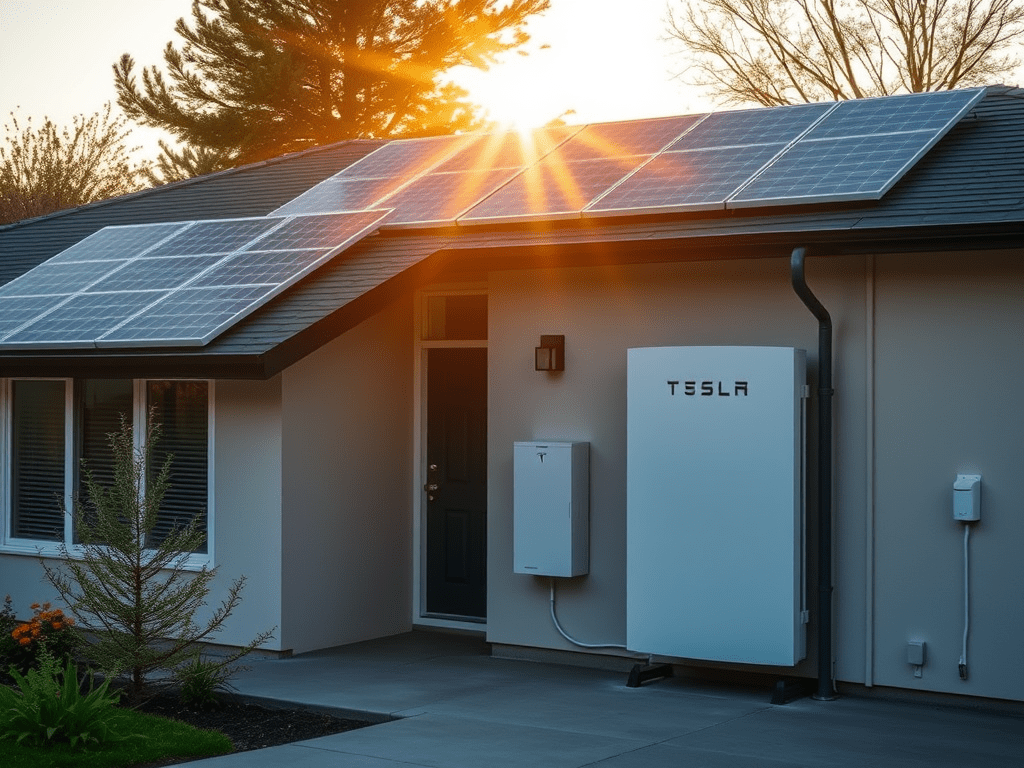
If you already have rooftop solar, adding battery storage is one of the most practical upgrades available. Most grid-tied solar systems shut off automatically during outages — even when the sun is shining — to protect utility workers. A battery changes that.
With storage, your system can:
- Power your home at night from energy generated during the day
- Keep essential circuits running during grid outages
- Reduce electricity costs if your utility uses time-of-use pricing
- Increase the share of solar energy you actually consume
What a Retrofit Actually Involves
Adding a battery to an existing solar system is more involved than installing one during the original build. Depending on your current inverter type, the installer may need to add an AC-coupled battery, upgrade to a hybrid inverter, or configure a dedicated backup panel. Expect retrofit projects to run $1,000–$2,000 more than a same-time installation due to the additional compatibility and wiring work.
Most systems installed in the last decade can be upgraded. Your installer will assess inverter compatibility, panel capacity, and which circuits you want backed up.
Cost to Add Battery Storage (2026)
| Battery Size | Installed Cost | Federal Tax Credit (30%) | Net Cost |
|---|---|---|---|
| 5 kWh | $7,000–$9,000 | –$2,100–$2,700 | $4,900–$6,300 |
| 10 kWh | $11,000–$16,000 | –$3,300–$4,800 | $7,700–$11,200 |
| 20 kWh | $18,000–$28,000 | –$5,400–$8,400 | $12,600–$19,600 |
The federal tax credit applies to battery systems charged primarily by solar. Consult a tax professional to confirm eligibility for your specific installation.
Most Common Battery Options for Retrofits
| Battery | Capacity | Best Fit | Warranty | Est. Installed Cost |
|---|---|---|---|---|
| Tesla Powerwall 3 | 13.5 kWh | Whole-home backup | 10 years | $11,000–$13,000 |
| Enphase IQ Battery 5P | 5 kWh (modular) | Existing Enphase microinverter systems | 15 years | $7,000–$8,500/unit |
| LG Chem RESU | ~10 kWh | Compact retrofits with string inverters | 10 years | $11,000–$14,000 |
| SolarEdge Home Battery | 10 kWh | Existing SolarEdge inverter owners | 10–15 years | $12,000–$15,000 |


Compatibility matters more than brand preference. The best battery for your home is the one that works cleanly with your existing inverter — not necessarily the most well-known name. Ask each installer which option requires the least additional hardware for your setup.
How the System Works Day-to-Day
- Panels generate electricity during daylight hours
- Your home draws what it needs first
- Surplus charges the battery
- At night or during an outage, the battery supplies power
- If the grid goes down, the system switches to backup mode automatically — no manual steps required
When paired with solar, the battery recharges each day, extending backup capability indefinitely in sunny conditions.
How Long Will It Power Your Home?
| Battery Capacity | What It Covers | Estimated Runtime |
|---|---|---|
| 5 kWh | Critical loads only (lights, phone charging, modem) | 6–12 hours |
| 10–13.5 kWh | Essentials (fridge, lights, internet, fans) | 12–24 hours |
| 20+ kWh | Partial whole-home coverage | 1–2 days |
These estimates assume no solar recharging. With daytime sun, runtime extends significantly — often through a multi-day outage.
Common Questions — Answered Directly
Is a battery worth the cost if I already have solar? That depends on your priorities. If your utility has strong net metering, a battery won’t dramatically improve your bill — the grid already acts as storage. But if you’ve experienced outages, have time-of-use rates, or simply want independence from the grid, the value is real and hard to quantify purely as ROI.
Will it work with my current system? Most grid-tied systems installed in the last 10 years are retrofittable. AC-coupled batteries are the most flexible option and work with nearly any inverter. Systems with Enphase microinverters or SolarEdge inverters have purpose-built battery options that integrate more cleanly.
Do I need to replace my inverter? Sometimes, but not always. AC-coupled batteries like the Powerwall 3 don’t require inverter replacement. Others may. Get clarity on this before signing — inverter replacement adds $2,000–$4,000 to the project cost.
Financial Snapshot
| Item | Amount |
|---|---|
| Battery System (Installed) | $13,000 |
| Federal Tax Credit (30%) | –$3,900 |
| Net Cost | $9,100 |
| Annual Bill Savings (if applicable) | $300–$800 |
For homeowners in areas with frequent outages or high time-of-use rates, the financial case is stronger. For those with flat-rate utility pricing and reliable grid service, the primary value is resilience rather than savings.
What to Look for When Comparing Options
When evaluating battery quotes, the specs that matter most are usable capacity (kWh), continuous power output (kW), compatibility with your existing inverter, warranty length, and whether the system is expandable. A battery with a longer warranty and simpler installation may be worth more than a cheaper unit requiring significant electrical work.
Getting quotes from two or three installers for the same battery model is the most reliable way to identify fair pricing — installed costs for identical systems can vary by $2,000 or more depending on the installer.
Discover more from Solar Spotlight
Subscribe to get the latest posts sent to your email.
