

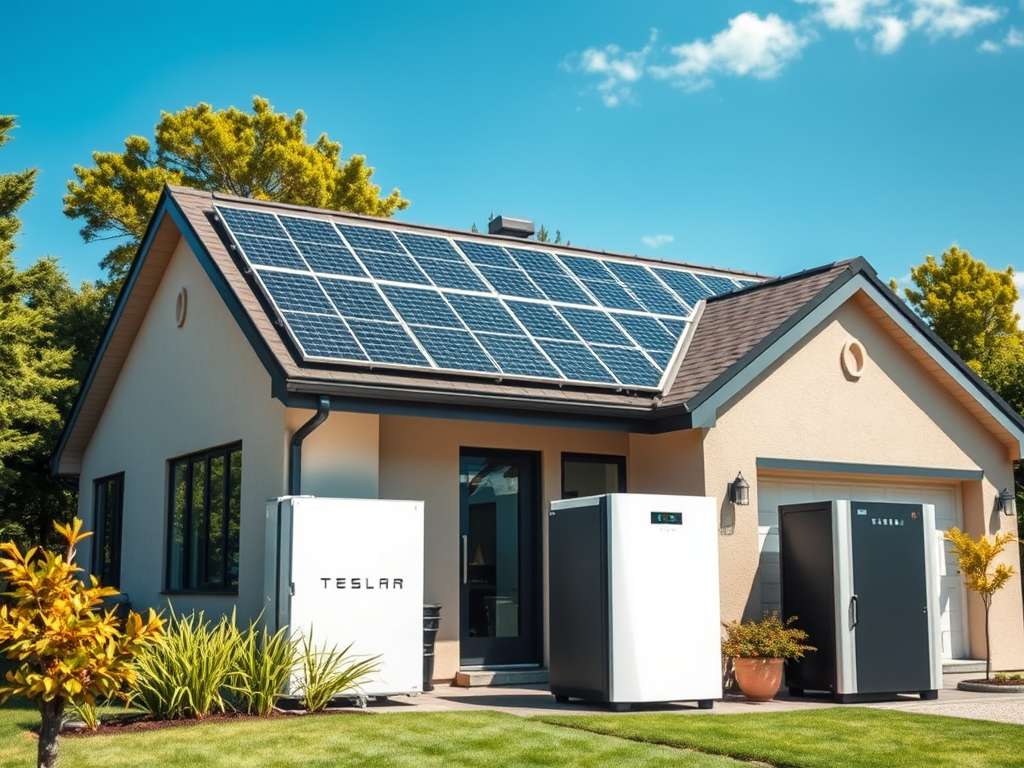
A solar and battery system sized for whole-home backup is the most capable residential energy setup available — but it’s also the most expensive and complex. This guide gives you honest numbers and a clear framework for deciding whether it’s right for your situation.
With a properly sized system, your home can:
- Switch to backup power automatically during outages
- Run entirely on stored solar energy overnight and through cloudy periods
- Sustain multi-day outages when solar recharging is factored in
- Reduce or eliminate grid dependence during peak pricing hours
What “Whole-House Backup” Actually Means
There’s an important distinction buyers often discover too late. Partial-home backup covers essential circuits — refrigerator, lights, internet, select outlets — and is achievable with one or two batteries at moderate cost. True whole-home backup, meaning every circuit including central air, electric range, water heater, and EV charger, requires 25–50+ kWh of storage and a high-capacity hybrid inverter. Most residential installations fall somewhere between the two.
Before sizing a system, identify which loads genuinely need backup versus which ones can be offline during an outage. That single decision has the largest impact on system cost.
System Comparison
| Battery | Capacity | Best Fit | Expandable | Est. Installed Cost |
|---|---|---|---|---|
| Tesla Powerwall 3 | 13.5 kWh | Most homes; broad installer availability | Yes | $12,000–$15,000 |
| Enphase IQ Battery 5P | 5 kWh (modular) | Homes with Enphase microinverters | Yes | $7,000–$9,000/unit |
| FranklinWH aPower | 13.6 kWh | Whole-home energy management | Yes | $12,000–$16,000 |
| EcoFlow Delta Pro Ultra | 6–90 kWh | Large or scalable systems | Yes | $8,000–$20,000+ |
| Goal Zero Haven | 20 kWh | High-capacity backup | Limited | $8,000–$11,000 |


Most whole-home installations use two to four batteries. The right brand depends heavily on inverter compatibility — a battery that integrates cleanly with your existing or planned inverter will cost less to install and perform more reliably than a mismatched combination.
How Much Storage Do You Actually Need?
Battery capacity is measured in kilowatt-hours (kWh). Runtime depends on which loads are active, not just home size.
| Backup Scope | Storage Needed | Typical Runtime (No Solar) |
|---|---|---|
| Essential loads only | 10–15 kWh | 12–24 hours |
| Most of home (no heavy appliances) | 20–30 kWh | 1–2 days |
| Whole home including AC | 35–50+ kWh | 1–2 days |
With solar recharging during daylight, a system sized for essential loads can sustain outages of several days. A system sized for whole-home coverage can operate indefinitely in sunny conditions.
The practical starting point: pull 12 months of utility bills, identify your average daily kWh usage, then work with an installer to calculate storage around your specific backup priorities — not a general home-size estimate.
Real Costs: Solar + Battery in 2026
| System Configuration | Installed Cost | After 30% Federal Tax Credit |
|---|---|---|
| Solar only (10 kW) | $20,000–$30,000 | $14,000–$21,000 |
| Solar + 1 battery (~13.5 kWh) | $30,000–$40,000 | $21,000–$28,000 |
| Solar + 2 batteries (~27 kWh) | $38,000–$50,000 | $27,000–$35,000 |
| Full whole-home system (35–50 kWh) | $45,000–$70,000 | $31,000–$49,000 |
Battery storage currently costs $1,000–$1,600 per kWh installed, depending on brand, system complexity, and whether electrical panel upgrades are required. The tax credit applies to battery systems charged primarily by solar — confirm eligibility with a tax professional before budgeting.
State and utility incentives vary significantly. The DSIRE database lists current programs by state and can meaningfully reduce net cost.
How the System Operates Day-to-Day
- Solar panels generate electricity during daylight
- Your home draws from solar production first
- Surplus charges the batteries
- At night or during an outage, batteries supply power
- Switchover happens in under 20 milliseconds — most electronics don’t register the transition
When the grid goes down, the system isolates from the utility and operates as a self-contained microgrid. Solar continues charging the batteries each day, extending backup duration through multi-day outages.
Common Questions — Answered Directly
Why not buy a generator instead? A whole-home standby generator costs $5,000–$15,000 installed and is a legitimate alternative for outage protection. It requires propane or natural gas, regular maintenance, and produces noise and emissions. It doesn’t store or interact with solar energy. For homeowners who want automatic, emission-free backup that integrates with solar, batteries are the better fit. For homeowners who primarily want cheap, reliable emergency power and don’t have solar, a generator may be more cost-effective.
Will it really run everything? With sufficient capacity and a properly rated hybrid inverter, yes — including central AC and well pumps. The limiting factor is usually inverter output (measured in kW), not just storage capacity. A 10 kWh battery with a 5 kW inverter cannot run a 4-ton AC unit regardless of charge level. Verify both the kWh and kW specs when comparing systems.
How many batteries do I need? For essential loads: one battery. For partial-home coverage: two. For whole-home backup including climate control: three to four, depending on system size and daily usage. An installer should base this on a formal load analysis, not a home-size rule of thumb.
What if the outage happens at night? The batteries carry the home through the night. The following morning, solar production begins recharging them. In most outage scenarios this cycle sustains the home indefinitely, with morning recharge more than offsetting overnight discharge.
Example System: 2,500 Sq Ft Home
| Component | Specification |
|---|---|
| Solar array | 10–12 kW |
| Battery storage | 27–40 kWh (2–3 batteries) |
| Hybrid inverter | 10–15 kW |
| Backup coverage | Whole home |
| Estimated cost (before incentives) | $40,000–$55,000 |
| Estimated cost (after 30% credit) | $28,000–$38,500 |
How to Get Accurate Quotes
- Start with a load analysis — know which circuits you actually need backed up
- Request quotes from installers certified by the battery manufacturer you’re considering; certification affects warranty validity
- Ask for hardware, labor, permitting, and any panel upgrade costs itemized separately
- Verify both kWh capacity and kW output rating for each proposed system
- Compare at least three installers — installed costs for identical systems commonly vary by $3,000–$8,000
The Bottom Line
A solar-plus-battery system for whole-home backup is a significant investment — $28,000–$50,000 after incentives for most households. It makes the strongest financial and practical case for homeowners with frequent outages, high time-of-use electricity rates, or a clear preference for energy independence.
The most important step before committing to any system is a formal load analysis. It determines what you actually need, prevents costly oversizing, and gives you a defensible basis for comparing installer quotes.
Discover more from Solar Spotlight
Subscribe to get the latest posts sent to your email.
