
Home Battery Storage for Frequent Power Outages (2026 Buyer’s Guide)


If you live somewhere with frequent outages, a home battery system keeps essential circuits running automatically — no startup delay, no fuel run, no noise.

Unlike gas generators, battery systems:

  • Switch to backup power in milliseconds, with no manual intervention
  • Recharge from solar panels or the grid
  • Run silently with no emissions or ongoing fuel cost
  • Require minimal maintenance over a 10–15 year lifespan

This guide covers realistic costs, system comparisons, and how to size a battery for your actual needs.


Understanding Your Options: Two Very Different Product Categories

Home battery products fall into two distinct categories that are frequently conflated in search results. Knowing which you need saves time and money.

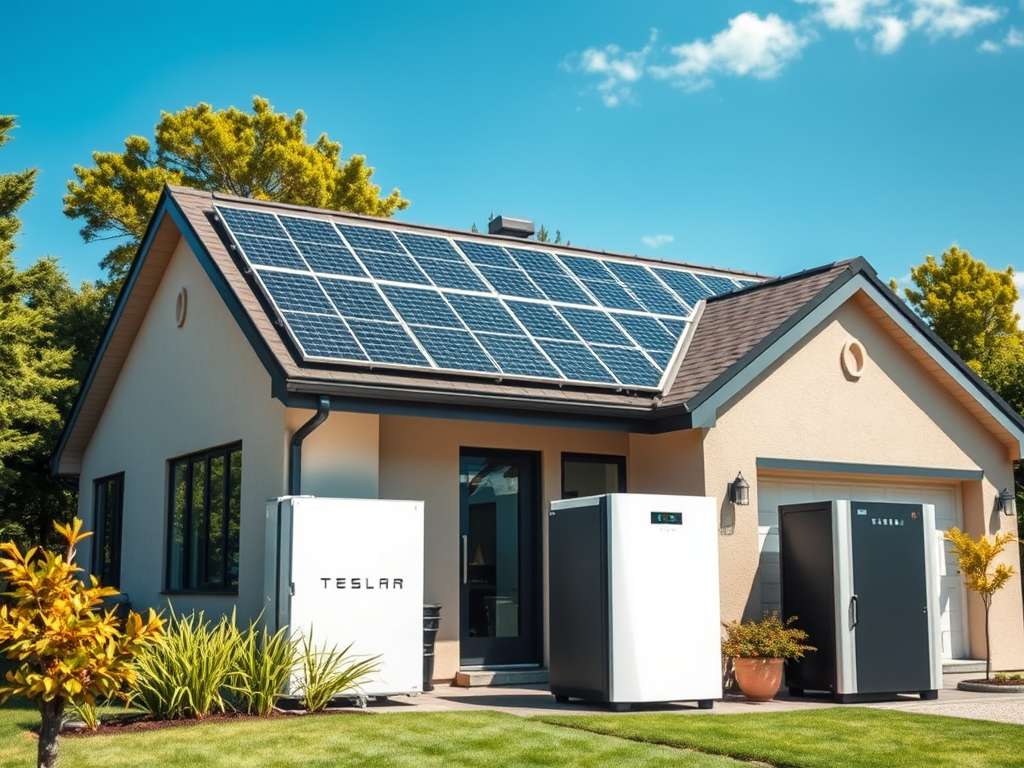
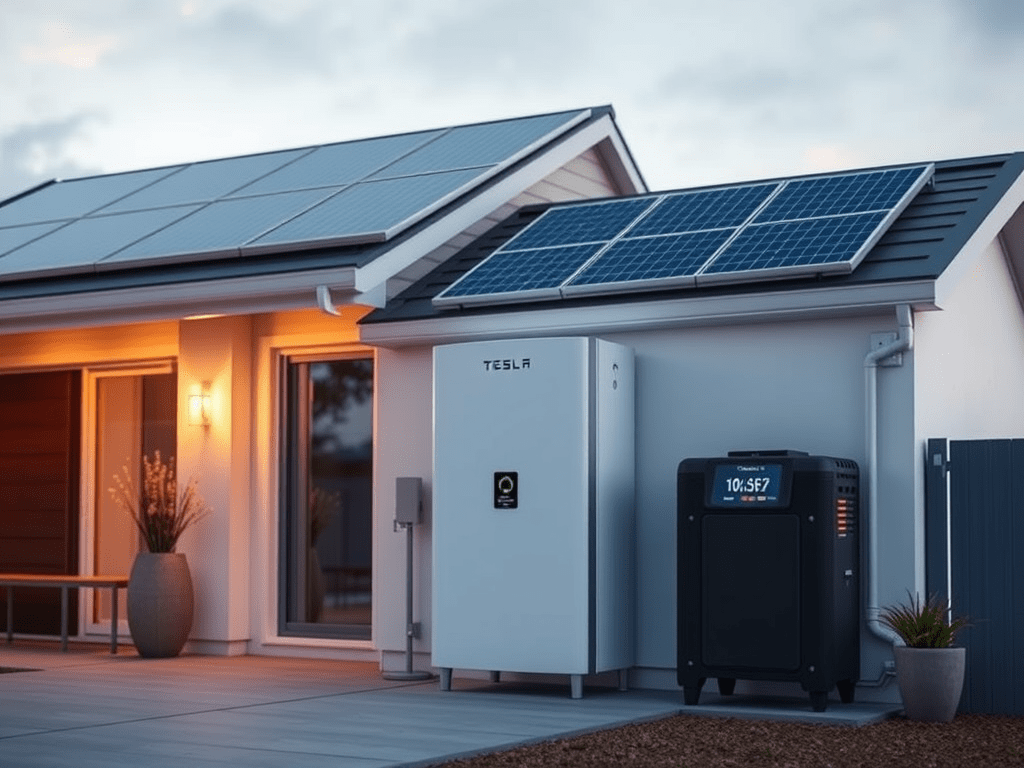
Whole-home battery systems (Tesla Powerwall, Goal Zero Haven) are permanently installed, wired into your electrical panel, and sized to run your home’s essential circuits for 12–48+ hours. These require professional installation and permits.

Portable power stations (Anker SOLIX, BLUETTI) are plug-in units storing 1–2 kWh — enough for phone charging, a lamp, or a small appliance for a few hours. They require no installation and cost $400–$1,500, but they aren’t a substitute for whole-home backup.

Most homeowners dealing with genuine outage risk need the first category.


Whole-Home Battery Comparison

SystemCapacityBest FitEst. Installed CostWarranty
Tesla Powerwall 313.5 kWhMost homes; integrates with solar$12,000–$16,00010 years
Goal Zero Haven20 kWhLarger homes or extended outages$11,000–$15,00010 years
Enphase IQ Battery 5P5 kWh (modular)Existing Enphase solar systems$7,000–$9,000/unit15 years

Systems can be stacked for greater capacity. Homes with air conditioning, electric water heaters, or medical equipment typically need 20 kWh or more for meaningful coverage.


How Long Will It Run Your Home?

Battery CapacityWhat It CoversEstimated Runtime (No Solar)
5 kWhCritical loads: lights, phone, modem3–8 hours
10 kWhEssentials: fridge, lights, internet, fans12–24 hours
13.5 kWhEssentials + modest additional loads18–36 hours
20 kWhPartial whole-home coverage2–3 days

With solar recharging during daylight, a properly sized system can sustain a multi-day outage indefinitely — which is the primary advantage of pairing storage with panels.

These figures assume typical household usage. Actual runtime depends on which circuits are backed up and how actively they’re used.


Installed Cost Ranges (2026)

Battery SizeHardware CostInstalled Cost
10 kWh$7,000–$10,000$10,000–$15,000
13.5 kWh~$9,000$12,000–$16,000
20 kWh$12,000–$18,000$18,000–$25,000

Hardware runs roughly $350–$680 per kWh. Installation adds $2,000–$5,500 depending on panel upgrades, permitting, and whether a new subpanel is needed for backup circuits.

The federal tax credit (30%) applies to battery systems charged primarily by solar — reducing a $13,000 system to roughly $9,100 net. Confirm eligibility with a tax professional.


Common Questions — Answered Directly

Why not just buy a generator? Generators cost less upfront — typically $500–$3,000 for portable units, $5,000–$15,000 installed for standby. But they require fuel storage, regular maintenance, manual startup or transfer switch installation, and produce carbon monoxide that prohibits indoor use. For outages lasting a few hours, a generator may be sufficient. For solar owners, households with medical equipment, or anyone wanting automatic protection, a battery is more practical.

Will it power my whole house? Probably not everything simultaneously. Most installations back up a dedicated circuit panel covering the refrigerator, lights, internet, and select outlets. Running central air conditioning, electric ranges, or EV chargers requires significantly more capacity — 20–40 kWh minimum, with higher power output ratings.

How do I know what size I need? Pull your last 12 months of utility bills to find your average daily kWh usage. A qualified installer will use this, plus a load analysis of your essential circuits, to recommend specific capacity. Oversizing is common when buyers skip this step.

Are batteries worth the cost without solar? Without solar, a battery charges from the grid and discharges during outages or peak pricing windows. In areas with frequent outages or high time-of-use rates, the value case is solid. In areas with reliable power and flat-rate pricing, payback is slower — and the value is primarily peace of mind rather than bill savings.


Real-World Cost Scenario

ItemCost
Tesla Powerwall 3 (hardware)$9,200
Installation$3,000–$5,500
Total Before Incentives$12,200–$14,700
Federal Tax Credit (30%, if solar-charged)–$3,660–$4,410
Net Cost$8,500–$11,000

State and utility rebates vary significantly — some programs offset an additional $1,000–$3,000. Check the DSIRE database for programs in your state before finalizing a budget.


How to Compare Installers

  1. Confirm which battery models the installer is certified to install — manufacturer certifications matter for warranty validity
  2. Ask for the quote broken out by hardware, labor, permitting, and any electrical upgrades separately
  3. Clarify exactly which circuits will be backed up and what the switchover process looks like
  4. Verify warranty terms cover both the battery cells and the inverter/gateway components
  5. Get at least two quotes — installed costs for identical systems routinely vary by $2,000 or more

The Bottom Line

For homes with genuine outage frequency, a whole-home battery system is a practical investment — particularly when paired with solar. The decision comes down to how much runtime you need, which circuits matter most, and whether you want solar recharging capability.

Start with a load analysis, get quotes for your actual usage profile, and compare installed costs — not just hardware prices.
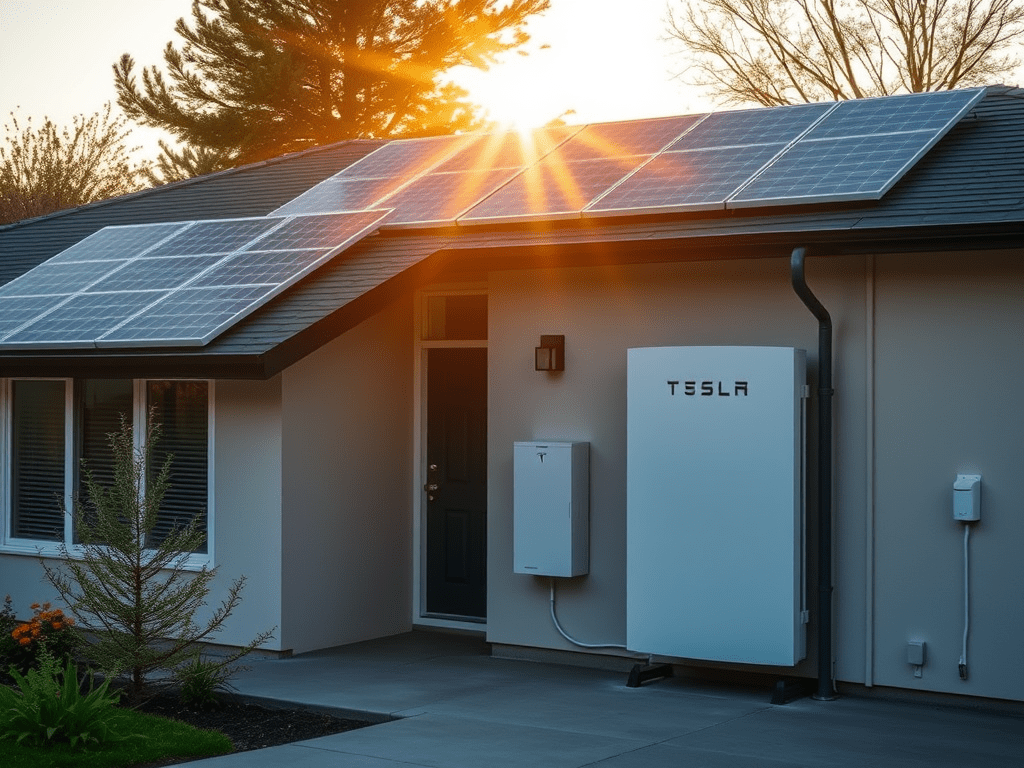

Adding Battery Backup to an Existing Solar System (2026 Guide)


If you already have rooftop solar, adding battery storage is one of the most practical upgrades available. Most grid-tied solar systems shut off automatically during outages — even when the sun is shining — to protect utility workers. A battery changes that.

With storage, your system can:

  • Power your home at night from energy generated during the day
  • Keep essential circuits running during grid outages
  • Reduce electricity costs if your utility uses time-of-use pricing
  • Increase the share of solar energy you actually consume

What a Retrofit Actually Involves

Adding a battery to an existing solar system is more involved than installing one during the original build. Depending on your current inverter type, the installer may need to add an AC-coupled battery, upgrade to a hybrid inverter, or configure a dedicated backup panel. Expect retrofit projects to run $1,000–$2,000 more than a same-time installation due to the additional compatibility and wiring work.

Most systems installed in the last decade can be upgraded. Your installer will assess inverter compatibility, panel capacity, and which circuits you want backed up.


Cost to Add Battery Storage (2026)

Battery SizeInstalled CostFederal Tax Credit (30%)Net Cost
5 kWh$7,000–$9,000–$2,100–$2,700$4,900–$6,300
10 kWh$11,000–$16,000–$3,300–$4,800$7,700–$11,200
20 kWh$18,000–$28,000–$5,400–$8,400$12,600–$19,600

The federal tax credit applies to battery systems charged primarily by solar. Consult a tax professional to confirm eligibility for your specific installation.


Most Common Battery Options for Retrofits

BatteryCapacityBest FitWarrantyEst. Installed Cost
Tesla Powerwall 313.5 kWhWhole-home backup10 years$11,000–$13,000
Enphase IQ Battery 5P5 kWh (modular)Existing Enphase microinverter systems15 years$7,000–$8,500/unit
LG Chem RESU~10 kWhCompact retrofits with string inverters10 years$11,000–$14,000
SolarEdge Home Battery10 kWhExisting SolarEdge inverter owners10–15 years$12,000–$15,000

Compatibility matters more than brand preference. The best battery for your home is the one that works cleanly with your existing inverter — not necessarily the most well-known name. Ask each installer which option requires the least additional hardware for your setup.


How the System Works Day-to-Day

  1. Panels generate electricity during daylight hours
  2. Your home draws what it needs first
  3. Surplus charges the battery
  4. At night or during an outage, the battery supplies power
  5. If the grid goes down, the system switches to backup mode automatically — no manual steps required

When paired with solar, the battery recharges each day, extending backup capability indefinitely in sunny conditions.


How Long Will It Power Your Home?

Battery CapacityWhat It CoversEstimated Runtime
5 kWhCritical loads only (lights, phone charging, modem)6–12 hours
10–13.5 kWhEssentials (fridge, lights, internet, fans)12–24 hours
20+ kWhPartial whole-home coverage1–2 days

These estimates assume no solar recharging. With daytime sun, runtime extends significantly — often through a multi-day outage.


Common Questions — Answered Directly

Is a battery worth the cost if I already have solar? That depends on your priorities. If your utility has strong net metering, a battery won’t dramatically improve your bill — the grid already acts as storage. But if you’ve experienced outages, have time-of-use rates, or simply want independence from the grid, the value is real and hard to quantify purely as ROI.

Will it work with my current system? Most grid-tied systems installed in the last 10 years are retrofittable. AC-coupled batteries are the most flexible option and work with nearly any inverter. Systems with Enphase microinverters or SolarEdge inverters have purpose-built battery options that integrate more cleanly.

Do I need to replace my inverter? Sometimes, but not always. AC-coupled batteries like the Powerwall 3 don’t require inverter replacement. Others may. Get clarity on this before signing — inverter replacement adds $2,000–$4,000 to the project cost.


Financial Snapshot

ItemAmount
Battery System (Installed)$13,000
Federal Tax Credit (30%)–$3,900
Net Cost$9,100
Annual Bill Savings (if applicable)$300–$800

For homeowners in areas with frequent outages or high time-of-use rates, the financial case is stronger. For those with flat-rate utility pricing and reliable grid service, the primary value is resilience rather than savings.


What to Look for When Comparing Options

When evaluating battery quotes, the specs that matter most are usable capacity (kWh), continuous power output (kW), compatibility with your existing inverter, warranty length, and whether the system is expandable. A battery with a longer warranty and simpler installation may be worth more than a cheaper unit requiring significant electrical work.

Getting quotes from two or three installers for the same battery model is the most reliable way to identify fair pricing — installed costs for identical systems can vary by $2,000 or more depending on the installer.


Solar + Battery System for Whole-House Backup (2026 Guide)

A solar and battery system sized for whole-home backup is the most capable residential energy setup available — but it’s also the most expensive and complex. This guide gives you honest numbers and a clear framework for deciding whether it’s right for your situation.

With a properly sized system, your home can:

  • Switch to backup power automatically during outages
  • Run entirely on stored solar energy overnight and through cloudy periods
  • Sustain multi-day outages when solar recharging is factored in
  • Reduce or eliminate grid dependence during peak pricing hours

What “Whole-House Backup” Actually Means

There’s an important distinction buyers often discover too late. Partial-home backup covers essential circuits — refrigerator, lights, internet, select outlets — and is achievable with one or two batteries at moderate cost. True whole-home backup, meaning every circuit including central air, electric range, water heater, and EV charger, requires 25–50+ kWh of storage and a high-capacity hybrid inverter. Most residential installations fall somewhere between the two.

Before sizing a system, identify which loads genuinely need backup versus which ones can be offline during an outage. That single decision has the largest impact on system cost.


System Comparison

BatteryCapacityBest FitExpandableEst. Installed Cost
Tesla Powerwall 313.5 kWhMost homes; broad installer availabilityYes$12,000–$15,000
Enphase IQ Battery 5P5 kWh (modular)Homes with Enphase microinvertersYes$7,000–$9,000/unit
FranklinWH aPower13.6 kWhWhole-home energy managementYes$12,000–$16,000
EcoFlow Delta Pro Ultra6–90 kWhLarge or scalable systemsYes$8,000–$20,000+
Goal Zero Haven20 kWhHigh-capacity backupLimited$8,000–$11,000

Most whole-home installations use two to four batteries. The right brand depends heavily on inverter compatibility — a battery that integrates cleanly with your existing or planned inverter will cost less to install and perform more reliably than a mismatched combination.


How Much Storage Do You Actually Need?

Battery capacity is measured in kilowatt-hours (kWh). Runtime depends on which loads are active, not just home size.

Backup ScopeStorage NeededTypical Runtime (No Solar)
Essential loads only10–15 kWh12–24 hours
Most of home (no heavy appliances)20–30 kWh1–2 days
Whole home including AC35–50+ kWh1–2 days

With solar recharging during daylight, a system sized for essential loads can sustain outages of several days. A system sized for whole-home coverage can operate indefinitely in sunny conditions.

The practical starting point: pull 12 months of utility bills, identify your average daily kWh usage, then work with an installer to calculate storage around your specific backup priorities — not a general home-size estimate.


Real Costs: Solar + Battery in 2026

System ConfigurationInstalled CostAfter 30% Federal Tax Credit
Solar only (10 kW)$20,000–$30,000$14,000–$21,000
Solar + 1 battery (~13.5 kWh)$30,000–$40,000$21,000–$28,000
Solar + 2 batteries (~27 kWh)$38,000–$50,000$27,000–$35,000
Full whole-home system (35–50 kWh)$45,000–$70,000$31,000–$49,000

Battery storage currently costs $1,000–$1,600 per kWh installed, depending on brand, system complexity, and whether electrical panel upgrades are required. The tax credit applies to battery systems charged primarily by solar — confirm eligibility with a tax professional before budgeting.

State and utility incentives vary significantly. The DSIRE database lists current programs by state and can meaningfully reduce net cost.


How the System Operates Day-to-Day

  1. Solar panels generate electricity during daylight
  2. Your home draws from solar production first
  3. Surplus charges the batteries
  4. At night or during an outage, batteries supply power
  5. Switchover happens in under 20 milliseconds — most electronics don’t register the transition

When the grid goes down, the system isolates from the utility and operates as a self-contained microgrid. Solar continues charging the batteries each day, extending backup duration through multi-day outages.


Common Questions — Answered Directly

Why not buy a generator instead? A whole-home standby generator costs $5,000–$15,000 installed and is a legitimate alternative for outage protection. It requires propane or natural gas, regular maintenance, and produces noise and emissions. It doesn’t store or interact with solar energy. For homeowners who want automatic, emission-free backup that integrates with solar, batteries are the better fit. For homeowners who primarily want cheap, reliable emergency power and don’t have solar, a generator may be more cost-effective.

Will it really run everything? With sufficient capacity and a properly rated hybrid inverter, yes — including central AC and well pumps. The limiting factor is usually inverter output (measured in kW), not just storage capacity. A 10 kWh battery with a 5 kW inverter cannot run a 4-ton AC unit regardless of charge level. Verify both the kWh and kW specs when comparing systems.

How many batteries do I need? For essential loads: one battery. For partial-home coverage: two. For whole-home backup including climate control: three to four, depending on system size and daily usage. An installer should base this on a formal load analysis, not a home-size rule of thumb.

What if the outage happens at night? The batteries carry the home through the night. The following morning, solar production begins recharging them. In most outage scenarios this cycle sustains the home indefinitely, with morning recharge more than offsetting overnight discharge.


Example System: 2,500 Sq Ft Home

ComponentSpecification
Solar array10–12 kW
Battery storage27–40 kWh (2–3 batteries)
Hybrid inverter10–15 kW
Backup coverageWhole home
Estimated cost (before incentives)$40,000–$55,000
Estimated cost (after 30% credit)$28,000–$38,500

How to Get Accurate Quotes

  1. Start with a load analysis — know which circuits you actually need backed up
  2. Request quotes from installers certified by the battery manufacturer you’re considering; certification affects warranty validity
  3. Ask for hardware, labor, permitting, and any panel upgrade costs itemized separately
  4. Verify both kWh capacity and kW output rating for each proposed system
  5. Compare at least three installers — installed costs for identical systems commonly vary by $3,000–$8,000

The Bottom Line

A solar-plus-battery system for whole-home backup is a significant investment — $28,000–$50,000 after incentives for most households. It makes the strongest financial and practical case for homeowners with frequent outages, high time-of-use electricity rates, or a clear preference for energy independence.

The most important step before committing to any system is a formal load analysis. It determines what you actually need, prevents costly oversizing, and gives you a defensible basis for comparing installer quotes.


Off-Grid Solar Kit with Lithium Battery for Cabin (2026 Buyer’s Guide)


If you own a remote cabin, tiny home, or off-grid retreat, a solar kit with lithium battery storage is typically the most cost-effective way to get reliable electricity — often far cheaper than running utility lines to the property.

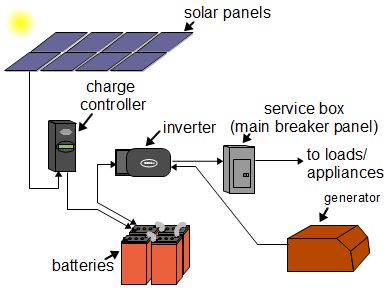
A complete kit includes solar panels, a lithium battery bank, charge controller, inverter, and mounting hardware. Most are designed for straightforward installation, though larger systems benefit from a licensed electrician for the final wiring.


Size Your System Before You Shop

The single biggest mistake cabin buyers make is choosing a kit based on marketing categories (“starter,” “whole-home”) rather than actual load calculations. A few minutes with a notepad prevents an expensive mismatch.

List every device you plan to run, its wattage, and daily hours of use. Multiply wattage by hours to get daily watt-hours, then add 20–30% for inefficiency losses. That number determines the battery capacity and panel wattage you need.

Cabin UsageRecommended Panel OutputSuggested Battery
Lights + phone charging300–500W1–2 kWh
Small appliances + TV800–1,500W2–4 kWh
Refrigerator + tools2,000W+4–8 kWh
Full off-grid cabin3,000–5,000W8–15 kWh

Battery storage matters as much as panel wattage — cabins rely entirely on what’s stored overnight and through cloudy stretches.


Why Lithium Over Lead-Acid

For cabin applications, lithium iron phosphate (LiFePO4) batteries have become the clear standard. The cost premium over lead-acid has narrowed significantly, and the practical advantages are substantial.

FeatureLithium (LiFePO4)Lead-Acid
Lifespan10–15 years3–5 years
Usable capacity80–90% of rated capacity~50% of rated capacity
WeightSignificantly lighterHeavy
MaintenanceNoneRequires regular attention
Cold weather performanceGoodDegrades significantly below 32°F

The cold weather point matters for seasonal cabins. Lead-acid batteries lose meaningful capacity in winter; lithium holds up considerably better, which is a practical difference in northern climates.


Top Cabin Solar Kits

1. Renogy 400W Starter Kit — Best for Weekend Cabins

Ideal for: Occasional use, lights, phone charging, small electronics

Renogy is among the most established names in off-grid solar and their starter kits are well-documented with strong community support — useful for first-time installers troubleshooting a DIY setup.

FeatureDetails
Solar Output400W
Compatible BatteryLithium or AGM
Typical Load CapacityLights, fan, phone charging, small TV
Price Range$1,200–$2,000

Pros: Straightforward installation; expandable; strong documentation and user community Cons: Insufficient for refrigeration or power tools without expansion


2. EcoFlow Power Kit — Best for Full-Time Off-Grid Living

Ideal for: Permanent or extended-stay cabins with modern appliance loads

EcoFlow’s modular system is purpose-built for off-grid homes. The smart inverter manages loads automatically, and the app provides real-time monitoring of production, consumption, and battery state.

FeatureDetails
Battery Capacity2–15 kWh (modular)
InverterBuilt-in, smart load management
ExpandableYes
Price Range$6,000–$15,000

Pros: Scales with changing needs; clean integration between components; strong monitoring Cons: Highest upfront cost in this category


3. Bluetti Off-Grid System — Best for Seasonal or Portable Use

Ideal for: Seasonal cabins, hunting camps, or setups that move between locations

Bluetti units are self-contained and don’t require permanent installation, making them practical for cabins that aren’t used year-round or where a fixed system isn’t worth the investment.

FeatureDetails
Battery Capacity2–10 kWh
Solar InputUp to 2,000W
PortabilityHigh — no permanent mounting required
Price Range$2,000–$8,000

Pros: No installation required; fast solar recharge; relocatable Cons: Not suitable as the sole power source for a full-time off-grid cabin


Side-by-Side Comparison

SystemBest ForBattery CapacityExpandableCost Range
Renogy Starter KitWeekend cabins1–2 kWhYes$1,000–$2,000
Bluetti SystemSeasonal/portable2–10 kWhLimited$2,000–$8,000
EcoFlow Power KitFull off-grid living2–15 kWhYes$6,000–$15,000

Common Questions — Answered Directly

Can solar realistically power a cabin? Yes, if sized to actual loads. Cabins running entirely on 2–5 kW solar systems are common. The key is accurate load calculation upfront — undersized systems are the most frequent source of buyer dissatisfaction in this category.

What happens during cloudy weather? Panels still produce at reduced output — typically 10–25% of rated capacity on overcast days. Properly sized battery storage covers the gap. As a rule, size your battery bank for 2–3 days of autonomy without solar input. For cabins in consistently cloudy regions, add a small generator as backup rather than oversizing panels and batteries.

Is solar cheaper than running utility lines? Usually by a wide margin for remote properties. Utility line extension costs $10,000–$50,000+ depending on distance and terrain. A capable off-grid system costs $4,000–$15,000. For properties more than a quarter mile from the nearest connection point, solar almost always wins on cost.

Is DIY installation realistic? For systems under 2 kW, yes — particularly with well-documented kits like Renogy. For systems above that threshold, especially those with 240V loads or battery banks exceeding 10 kWh, a licensed electrician should handle the final connections. Many jurisdictions also require permits for permanent installations regardless of size.


Example System: Typical Off-Grid Cabin

ComponentSpecification
Solar panels1,500W
Lithium battery5 kWh
Inverter3,000W
Estimated total cost$4,000–$8,000
Practical coverageLights, refrigerator, electronics, small appliances

This configuration handles most cabin needs through the night on a full battery charge and recovers fully on a clear day of solar production.


What to Check Before Buying

Evaluate any kit against these criteria before purchasing: total usable battery capacity (not just rated), inverter continuous wattage output, whether the charge controller is included or separate, warranty length on battery cells specifically, and whether the manufacturer provides genuine technical support for DIY installers. The last point matters more than most buyers anticipate — installation questions are common, and response quality varies significantly by brand.


Solar Panel Financing with Low Credit in Kentucky (2026 Homeowner Guide)


Many Kentucky homeowners assume solar isn’t an option with a low credit score. In practice, several financing paths remain open below 650 — though the terms, ownership structure, and long-term value differ significantly between them. Understanding those differences before signing anything is the most important step.


Credit Score and Your Realistic Options

Credit ScoreFinancing Options Available
700+Best loan rates; full range of options
620–699Most solar loans; competitive terms
580–619Limited loan options; higher rates
Below 580Lease and PPA most accessible; co-signer may unlock loans

Most solar lenders set minimum thresholds around 600–650. Some accept scores as low as 580 with adjusted rates or additional requirements. Lenders who specialize in solar often weigh income stability and home equity alongside credit score — so a lower score doesn’t automatically disqualify an application.


Financing Options for Low-Credit Borrowers

1. Solar Lease — Easiest Approval Path

You pay a fixed monthly fee to use the system. The solar company owns the equipment, handles maintenance, and takes the tax credits.

FeatureDetails
Upfront Cost$0
Credit RequirementAmong the lowest
System OwnershipSolar company
Typical Term20–25 years

Pros: Easiest approval; no maintenance responsibility; predictable monthly cost Cons: You don’t own the system or qualify for the federal tax credit; long-term savings are smaller than ownership; selling your home requires either buying out the lease or transferring it to the buyer, which can complicate transactions


2. Power Purchase Agreement (PPA)

Instead of a fixed lease payment, you pay per kilowatt-hour of electricity the system produces — typically at a rate below your utility’s retail rate.

FeatureDetails
Upfront Cost$0
Credit RequirementOften flexible; some require minimal credit check
Payment StructurePer kWh generated
System OwnershipSolar company

Pros: Immediate reduction in electricity costs; no maintenance; no ownership risk Cons: You don’t own the system or claim tax credits; rate escalators in contracts can reduce savings over time; same home-sale complications as leases

Note: PPAs are not available in all Kentucky counties. Confirm availability with installers before pursuing this path.


3. Solar Loan — Best for Long-Term Value

You own the system, qualify for the 30% federal tax credit, and build home equity. The trade-off is a higher credit bar and, for lower scores, elevated interest rates.

FeatureDetails
Minimum Credit Score~580–620 depending on lender
Down PaymentOften optional
System OwnershipYou
Loan Term10–25 years

Pros: Full ownership; federal tax credit eligibility; long-term savings significantly higher than lease or PPA Cons: Higher interest rates at lower credit scores can erode savings; approval requirements vary by lender

For borrowers near the 580–620 threshold, applying with a co-signer or using a home equity loan or HELOC often unlocks better rates than unsecured solar loans.


Financing Comparison

TypeCredit RequirementYou Own SystemTax Credit EligibleBest For
Solar LeaseLowNoNoImmediate access; credit-challenged buyers
PPAVery lowNoNoBill savings with minimal qualification
Solar Loan580+YesYesMaximum long-term financial return

The ownership distinction matters more than most buyers realize. Leases and PPAs lower the barrier to entry but transfer the financial benefits — tax credits, home value increase, long-term savings — to the solar company.


Kentucky System Costs

System SizeAverage Installed CostAfter 30% Federal Tax Credit
6 kW~$18,000~$12,600
8 kW~$22,000~$15,400
10 kW~$27,000~$18,900

The federal tax credit applies only to owned systems — not leases or PPAs. If your financing path involves ownership, factor this credit into your net cost calculation. Confirm eligibility with a tax professional, as it applies in the year of installation.


Common Questions — Answered Directly

My credit score is below 600. What are my realistic options? Solar leases and PPAs are the most accessible paths. If you have a creditworthy co-signer or meaningful home equity, a loan may also be viable. Some solar lenders consider income consistency and debt-to-income ratio alongside credit score, so rejection from one lender doesn’t mean rejection from all — compare at least two or three.

Are “free solar panels” legitimate? The phrase refers to $0-down leases or PPAs, not panels you receive without ongoing cost. You’ll pay either a monthly lease fee or a per-kWh rate for the electricity generated. These products are legitimate but are sometimes marketed aggressively with language that obscures the long-term payment obligation. Read the full contract — particularly any rate escalator clauses — before signing.

Will applying for solar financing affect my credit score? Most solar loan applications trigger a hard inquiry, which typically reduces your score by a few points temporarily. Soft-pull prequalification tools, available from many lenders, let you check likely terms without affecting your score. Once a loan is active, consistent on-time payments can improve your credit over time.

Is financed solar still worth it financially? For owned systems, usually yes — though higher interest rates compress the margin. At 8–10% interest on a 25-year loan, monthly payments can approach or exceed monthly savings in the early years, with the economics improving as utility rates rise. Run a break-even calculation with your actual loan rate before committing, rather than relying on general savings estimates.


How to Improve Your Approval Odds

If your application is declined or rates are unfavorable, these steps meaningfully improve your position: paying down revolving debt (which raises your score faster than other actions), applying with a co-signer with strong credit, exploring home equity options if you have available equity, and comparing specialized solar lenders rather than general personal loan providers. Each lender uses different underwriting criteria, and a borrower rejected by one is sometimes approved by another.


Example Scenario: 8 kW System, Kentucky Homeowner

ItemOwned (Loan)Leased
Installed Cost$22,000$22,000
Federal Tax Credit–$6,600Not applicable
Net Cost~$15,400N/A
Est. Monthly Payment$120–$180$80–$120
Est. Monthly Bill Savings$80–$150$40–$90
25-Year Net BenefitHigherLower

The loan scenario requires stronger credit and more upfront financial engagement. The lease scenario is more accessible but delivers less financial return over the system’s life.


Solar Generator for Sump Pump Backup (2026 Buyer’s Guide)


A sump pump that loses power during a storm can leave a basement underwater in minutes. A solar generator is one of the most practical backup solutions: it works indoors without fumes, switches on without manual intervention, and recharges from solar panels or a standard outlet between uses.

This guide covers exactly what to look for, which models handle typical residential pumps, and how to avoid the most common sizing mistake.


The One Spec That Determines Whether It Works: Surge Wattage

Most buyers focus on battery capacity. The more important number for sump pump backup is surge wattage — the peak power the generator can deliver for the two to three seconds it takes a pump motor to start.

Sump pump motors draw two to four times their running wattage at startup. A generator that can’t meet that surge will fail to start the pump even if the battery is fully charged.

Pump SizeRunning WattsStartup Surge
1/3 HP~800W1,300–2,900W
1/2 HP~1,050W2,150–4,100W

Check your pump’s nameplate or manual for its exact HP rating, then choose a generator with a surge rating comfortably above the startup figure — not just above the running wattage.


Top Solar Generators for Sump Pump Backup

GeneratorBattery CapacityContinuous PowerSurge PowerBest Fit
EcoFlow Delta Pro3.6 kWh3,600W7,200W1/2 HP pumps; extended outages
Pecron E2000LFP~2 kWh2,000W4,000WMost 1/3–1/2 HP pumps
Champion 998Wh998Wh1,000W2,000W1/3 HP pumps; shorter outages

For most homes with a 1/3 to 1/2 HP pump, the Pecron E2000LFP or EcoFlow Delta Pro covers the surge requirement with margin. The Champion is adequate for smaller pumps and shorter outages but leaves little headroom for a 1/2 HP motor at startup.


How Long Will It Last During a Storm?

Sump pumps don’t run continuously — they cycle on when the pit fills and shut off again. During a typical storm, a pump might run for a few minutes out of every hour. That cycling behavior extends battery runtime considerably beyond what a continuous-draw calculation would suggest.

Battery CapacityEstimated Runtime (Intermittent Cycling)
1 kWh2–4 hours
2 kWh5–10 hours
3.6 kWh10–20+ hours

These are estimates — actual runtime depends on how frequently your pump cycles, which varies with groundwater conditions and storm intensity. During a slow-draining storm that runs the pump heavily, assume the lower end of each range.

With solar panels recharging during daylight hours, a system can sustain multi-day outages in most scenarios.


Solar Generator vs. Gas Generator for Sump Pump Use

FactorSolar GeneratorGas Generator
Indoor useSafe — no emissionsNever safe indoors
StartupAutomaticManual or transfer switch
Fuel requiredNoneMust be stocked and fresh
NoiseSilentLoud
MaintenanceNoneAnnual servicing required
Upfront cost$750–$1,600$500–$2,000

The practical case for solar over gas in this specific application is strong: sump pump outages happen during storms, often at night, when running outside to start a generator — or storing and rotating fuel — is a real friction point. A solar generator sits plugged in, charged, and ready without any action required.


Common Questions — Answered Directly

Will it actually start my pump? Only if the surge rating exceeds your pump’s startup draw. This is where buyers most commonly go wrong — purchasing based on battery capacity or continuous wattage without checking surge. Confirm your pump’s startup wattage before buying any generator.

Can solar panels keep it running through a multi-day storm? In most cases, yes. A 200–400W panel array recharges the battery during daylight gaps even in overcast conditions. If your pump cycles intermittently, daytime recharging can fully offset overnight discharge through a two to three day storm event.

What if my pump runs constantly during heavy flooding? That scenario — a pump running near-continuously for hours — requires a larger battery than most portable solar generators provide. For properties with serious flooding risk or high water tables, consider a dedicated battery backup sump pump system as a complement, or size up to a 3.6+ kWh generator with a solar panel array.


Example Setup: Storm-Ready Sump Backup

ComponentSpecification
Solar generator2,000–3,600W inverter, 2–3.6 kWh battery
Solar panels200–400W
Total estimated cost$1,200–$2,500

Keep the generator plugged into a wall outlet when not in use so it stays charged. Connect it directly to the sump pump with an appropriate extension cord rated for the pump’s amperage. No transfer switch or electrician is required for this configuration.


Before You Buy: Key Checks

  1. Find your pump’s horsepower rating — it’s on the motor nameplate or in the documentation
  2. Look up its startup surge wattage; if unavailable, use 3× the running wattage as an estimate
  3. Choose a generator with a surge rating at least 20% above that number
  4. Confirm the battery capacity covers your expected outage duration at your pump’s cycling frequency
  5. Verify solar panel input compatibility if you plan to add panels for recharging

Hello World!

Welcome to Solar Spotlight

Welcome to Solar Spotlight — your go-to source for clear, practical insights on solar energy and battery solutions.

Whether you’re looking to lower your electric bill, explore backup power options, or take the first step toward energy independence, we’re here to simplify the process. Our goal is to break down complex topics into straightforward, easy-to-understand guidance so you can make confident decisions.

From product comparisons to cost-saving strategies, Solar Spotlight is designed to help you find the best solar solutions for your home.

Smarter energy starts here.