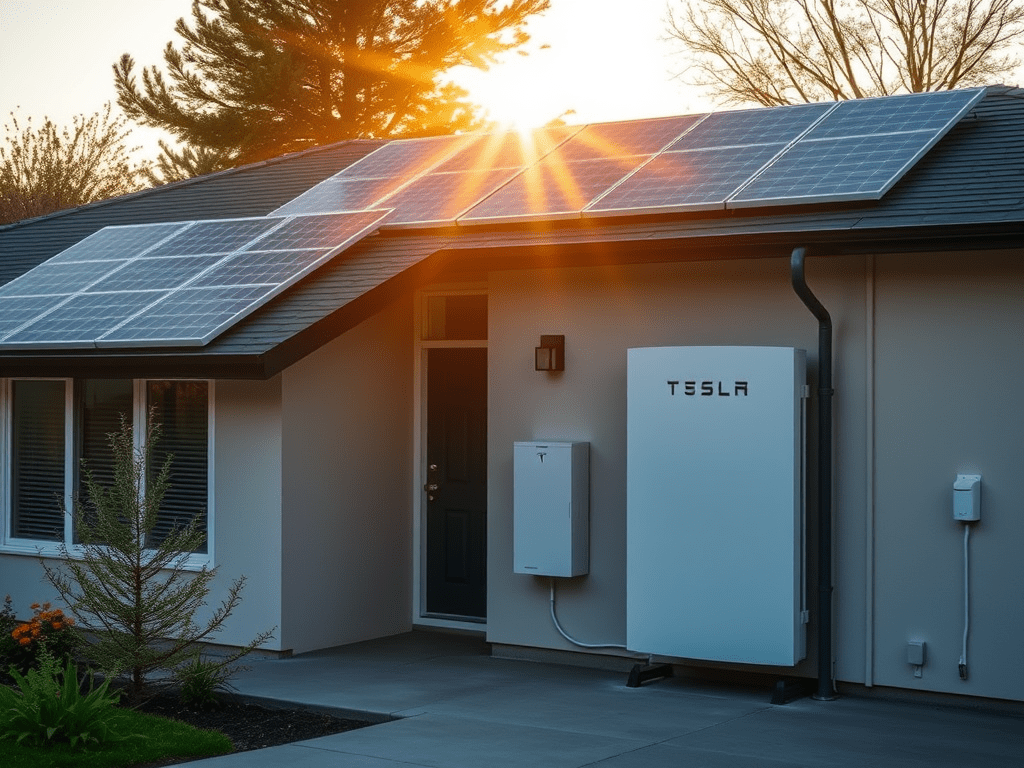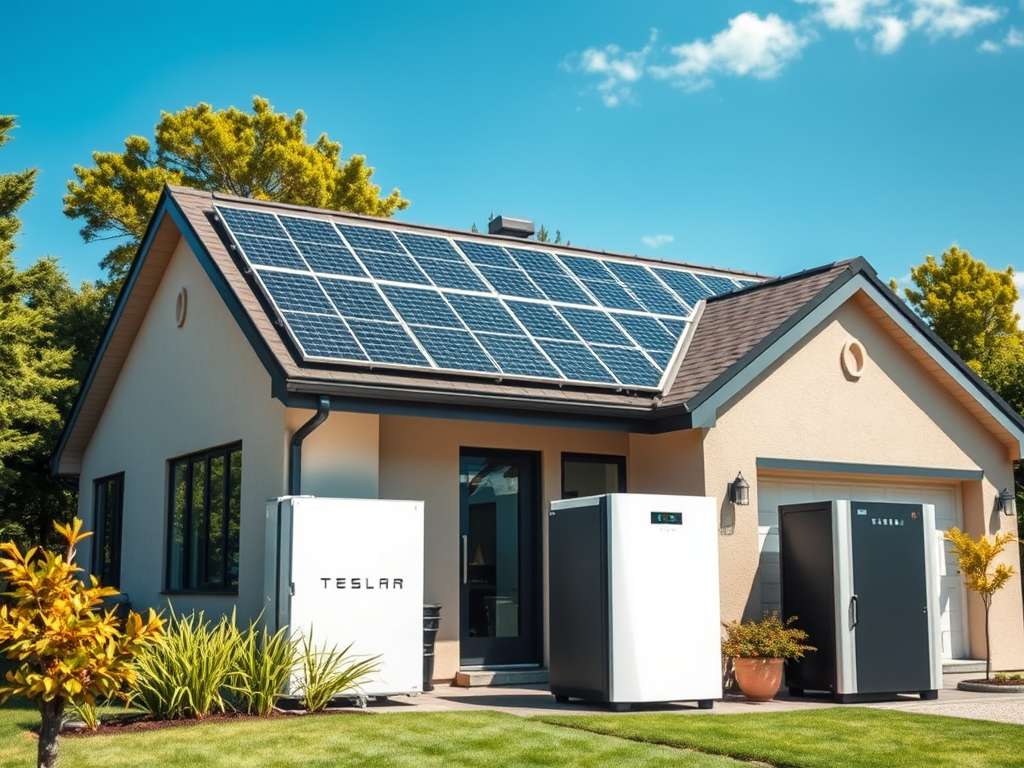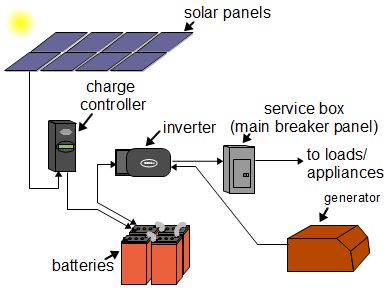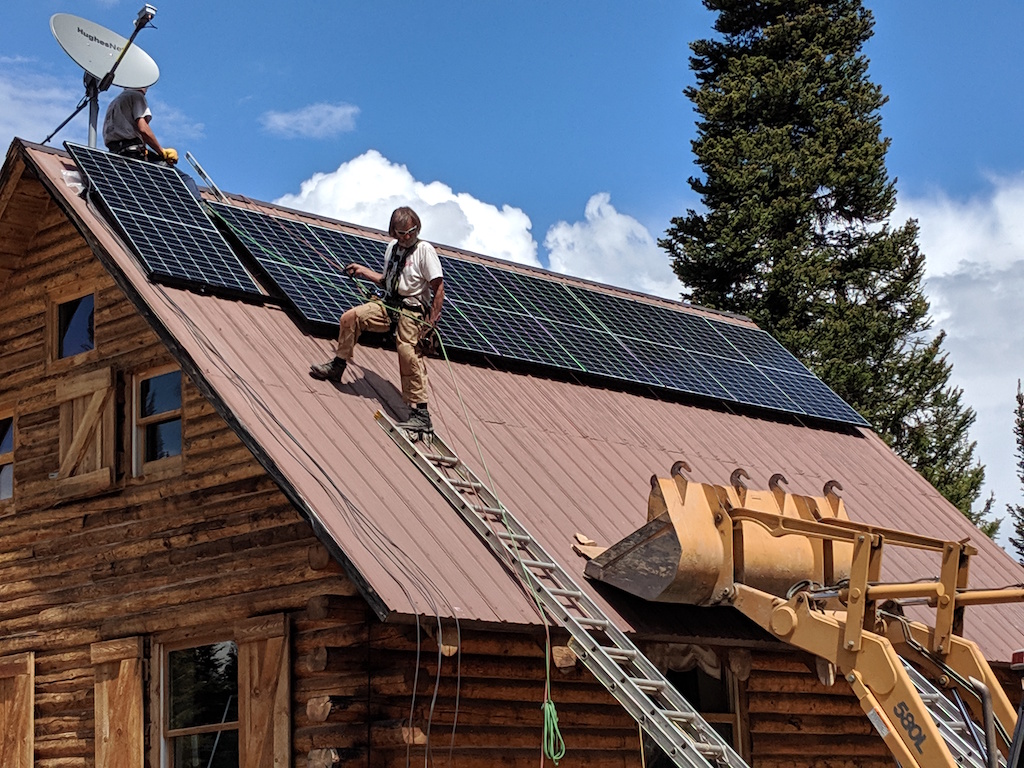

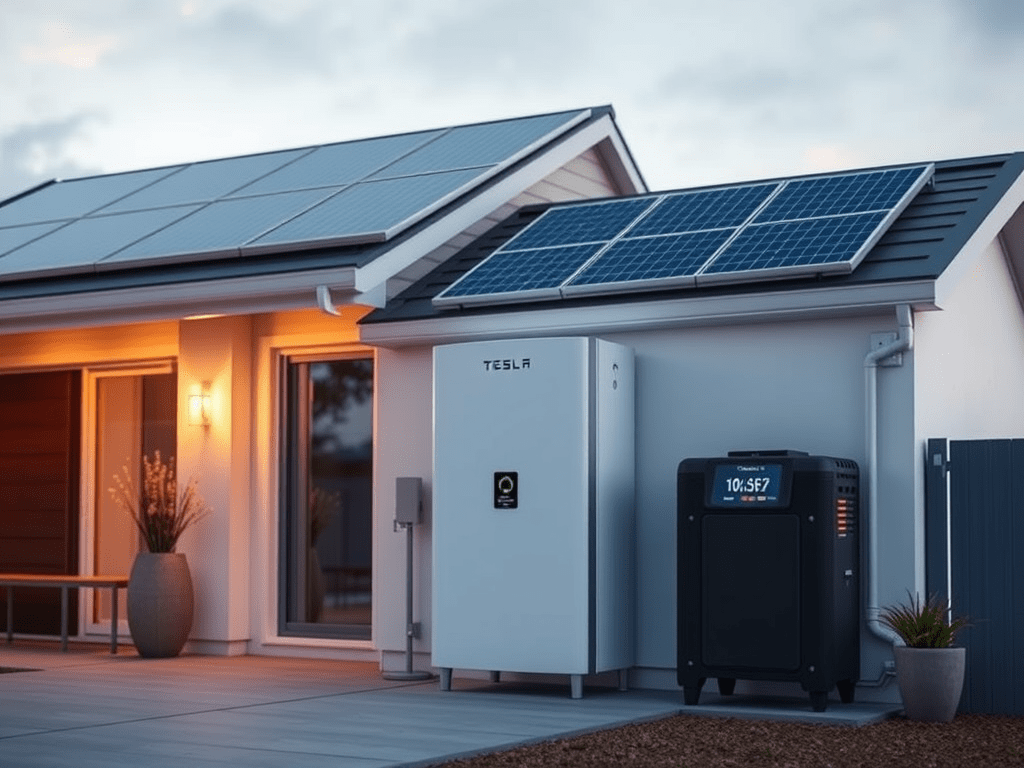
If you live somewhere with frequent outages, a home battery system keeps essential circuits running automatically — no startup delay, no fuel run, no noise.
Unlike gas generators, battery systems:
- Switch to backup power in milliseconds, with no manual intervention
- Recharge from solar panels or the grid
- Run silently with no emissions or ongoing fuel cost
- Require minimal maintenance over a 10–15 year lifespan
This guide covers realistic costs, system comparisons, and how to size a battery for your actual needs.
Understanding Your Options: Two Very Different Product Categories
Home battery products fall into two distinct categories that are frequently conflated in search results. Knowing which you need saves time and money.
Whole-home battery systems (Tesla Powerwall, Goal Zero Haven) are permanently installed, wired into your electrical panel, and sized to run your home’s essential circuits for 12–48+ hours. These require professional installation and permits.
Portable power stations (Anker SOLIX, BLUETTI) are plug-in units storing 1–2 kWh — enough for phone charging, a lamp, or a small appliance for a few hours. They require no installation and cost $400–$1,500, but they aren’t a substitute for whole-home backup.
Most homeowners dealing with genuine outage risk need the first category.
Whole-Home Battery Comparison
| System | Capacity | Best Fit | Est. Installed Cost | Warranty |
|---|---|---|---|---|
| Tesla Powerwall 3 | 13.5 kWh | Most homes; integrates with solar | $12,000–$16,000 | 10 years |
| Goal Zero Haven | 20 kWh | Larger homes or extended outages | $11,000–$15,000 | 10 years |
| Enphase IQ Battery 5P | 5 kWh (modular) | Existing Enphase solar systems | $7,000–$9,000/unit | 15 years |


Systems can be stacked for greater capacity. Homes with air conditioning, electric water heaters, or medical equipment typically need 20 kWh or more for meaningful coverage.
How Long Will It Run Your Home?
| Battery Capacity | What It Covers | Estimated Runtime (No Solar) |
|---|---|---|
| 5 kWh | Critical loads: lights, phone, modem | 3–8 hours |
| 10 kWh | Essentials: fridge, lights, internet, fans | 12–24 hours |
| 13.5 kWh | Essentials + modest additional loads | 18–36 hours |
| 20 kWh | Partial whole-home coverage | 2–3 days |
With solar recharging during daylight, a properly sized system can sustain a multi-day outage indefinitely — which is the primary advantage of pairing storage with panels.
These figures assume typical household usage. Actual runtime depends on which circuits are backed up and how actively they’re used.
Installed Cost Ranges (2026)
| Battery Size | Hardware Cost | Installed Cost |
|---|---|---|
| 10 kWh | $7,000–$10,000 | $10,000–$15,000 |
| 13.5 kWh | ~$9,000 | $12,000–$16,000 |
| 20 kWh | $12,000–$18,000 | $18,000–$25,000 |
Hardware runs roughly $350–$680 per kWh. Installation adds $2,000–$5,500 depending on panel upgrades, permitting, and whether a new subpanel is needed for backup circuits.
The federal tax credit (30%) applies to battery systems charged primarily by solar — reducing a $13,000 system to roughly $9,100 net. Confirm eligibility with a tax professional.
Common Questions — Answered Directly
Why not just buy a generator? Generators cost less upfront — typically $500–$3,000 for portable units, $5,000–$15,000 installed for standby. But they require fuel storage, regular maintenance, manual startup or transfer switch installation, and produce carbon monoxide that prohibits indoor use. For outages lasting a few hours, a generator may be sufficient. For solar owners, households with medical equipment, or anyone wanting automatic protection, a battery is more practical.
Will it power my whole house? Probably not everything simultaneously. Most installations back up a dedicated circuit panel covering the refrigerator, lights, internet, and select outlets. Running central air conditioning, electric ranges, or EV chargers requires significantly more capacity — 20–40 kWh minimum, with higher power output ratings.
How do I know what size I need? Pull your last 12 months of utility bills to find your average daily kWh usage. A qualified installer will use this, plus a load analysis of your essential circuits, to recommend specific capacity. Oversizing is common when buyers skip this step.
Are batteries worth the cost without solar? Without solar, a battery charges from the grid and discharges during outages or peak pricing windows. In areas with frequent outages or high time-of-use rates, the value case is solid. In areas with reliable power and flat-rate pricing, payback is slower — and the value is primarily peace of mind rather than bill savings.
Real-World Cost Scenario
| Item | Cost |
|---|---|
| Tesla Powerwall 3 (hardware) | $9,200 |
| Installation | $3,000–$5,500 |
| Total Before Incentives | $12,200–$14,700 |
| Federal Tax Credit (30%, if solar-charged) | –$3,660–$4,410 |
| Net Cost | $8,500–$11,000 |
State and utility rebates vary significantly — some programs offset an additional $1,000–$3,000. Check the DSIRE database for programs in your state before finalizing a budget.
How to Compare Installers
- Confirm which battery models the installer is certified to install — manufacturer certifications matter for warranty validity
- Ask for the quote broken out by hardware, labor, permitting, and any electrical upgrades separately
- Clarify exactly which circuits will be backed up and what the switchover process looks like
- Verify warranty terms cover both the battery cells and the inverter/gateway components
- Get at least two quotes — installed costs for identical systems routinely vary by $2,000 or more
The Bottom Line
For homes with genuine outage frequency, a whole-home battery system is a practical investment — particularly when paired with solar. The decision comes down to how much runtime you need, which circuits matter most, and whether you want solar recharging capability.
Start with a load analysis, get quotes for your actual usage profile, and compare installed costs — not just hardware prices.